
The highest drivable road on every continent
A continent-by-continent ranking of the highest public roads you can actually drive in 2026. Mig La in Ladakh, Abra del Acay in Argentina, Mount Blue Sky in Colorado, Tlaeeng in Lesotho, and more.
"Drivable" is a contested word. Some lists count military roads behind permanent locked gates. Some count a 4x4 mining track where the last vehicle went in 2009. This list uses a stricter definition: a road that a reasonably capable private vehicle can actually reach the summit of, this year, in season. With that rule in place, here are the two highest drivable roads on every continent in 2026.
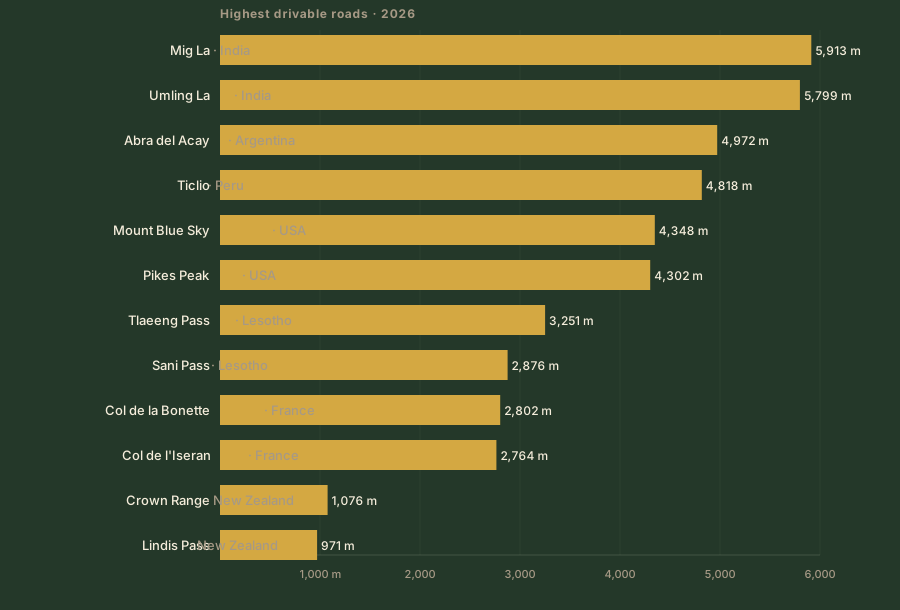
Asia (and the world)
Asia owns the high end by a wide margin. The top two public drivable roads on earth are both in eastern Ladakh, both built by India's Border Roads Organisation, and both within 40 kilometres of each other.
1. Mig La, 5,913 m, India
Completed by the BRO in October 2025, Mig La sits at 19,400 feet on the 64-kilometre Likaru–Fukche road. It took the motorable world record from the same agency's own Umling La just up the valley. The road runs to an Indian Air Force advance landing ground at Fukche, three kilometres from the Line of Actual Control with China.
2. Umling La, 5,799 m, India
The previous record holder, paved in 2017 and Guinness-certified in 2021. Still one of the wildest drives on earth, across a paved plateau where the air carries roughly half the oxygen of sea level.
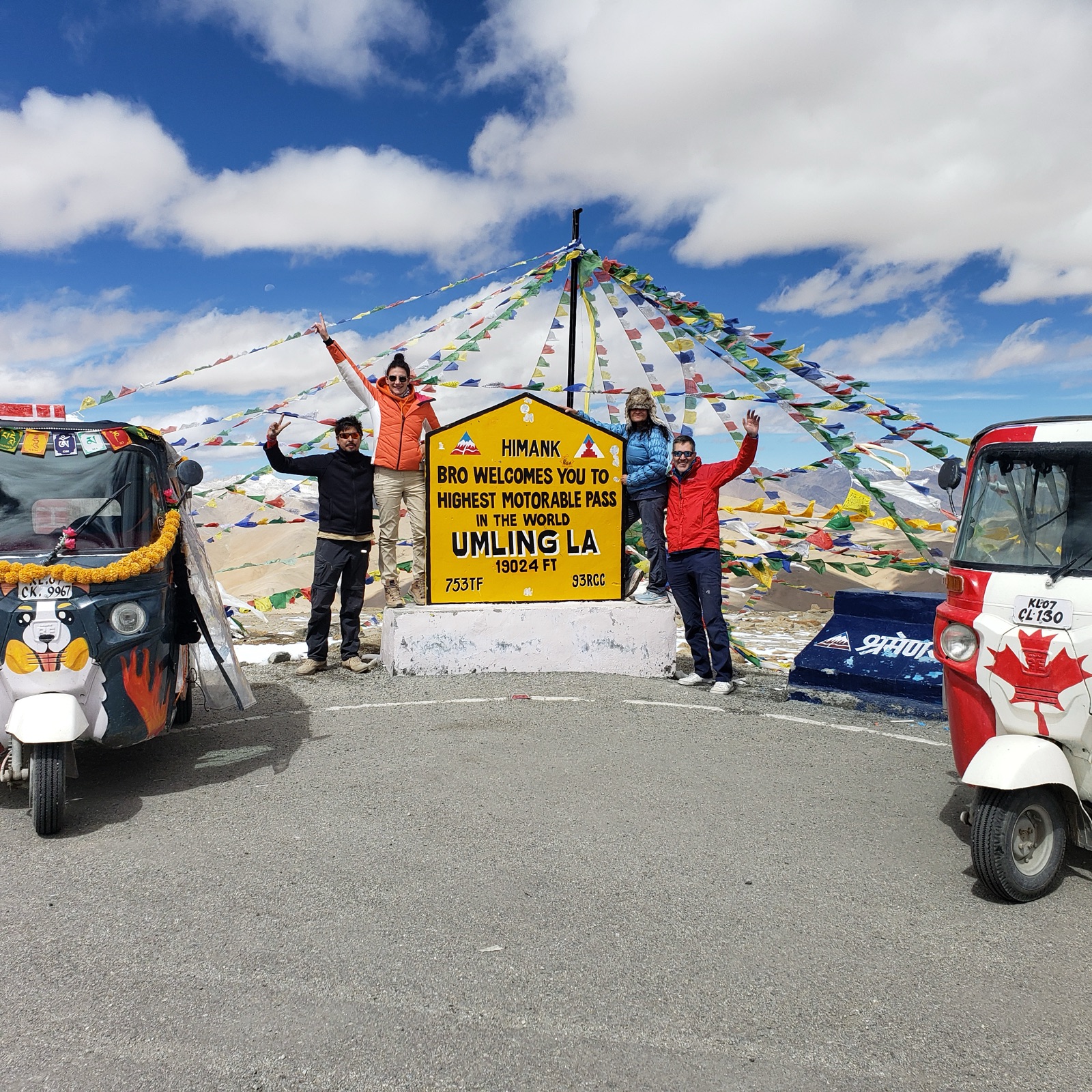 Photo: Newspinal / Wikimedia Commons · CC BY-SA 4.0
South America
1. Abra del Acay, 4,972 m, Argentina
The highest road pass on a national highway in the Americas, on the original line of Ruta Nacional 40 in Salta Province. Gravel, no guardrails, and the old summit sign still reads 4,895 m; the modern GPS figure is 4,972 m. Ruta 40 itself was rerouted in 2006 to avoid the pass, and it now sees a few vehicles a day in summer.
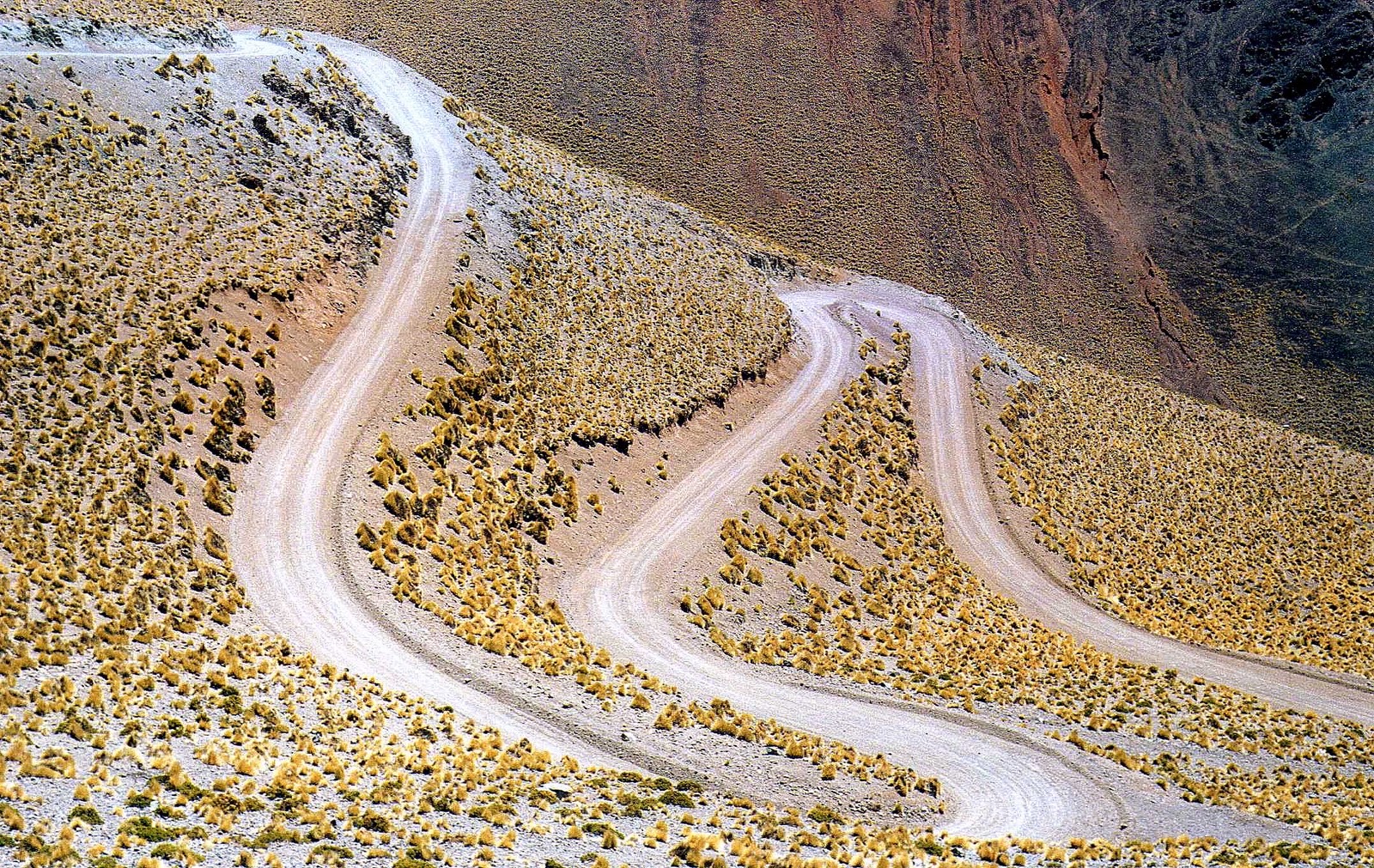 Photo: Maximiliano Andrés Pérez / Wikimedia Commons · CC BY 2.0
2. Ticlio, 4,818 m, Peru
The high point of the Carretera Central between Lima and Huancayo. Fully paved, carrying heavy truck traffic daily, and paralleled through the same pair of valleys by the Ferrocarril Central Andino, once the highest standard-gauge railway in the world.
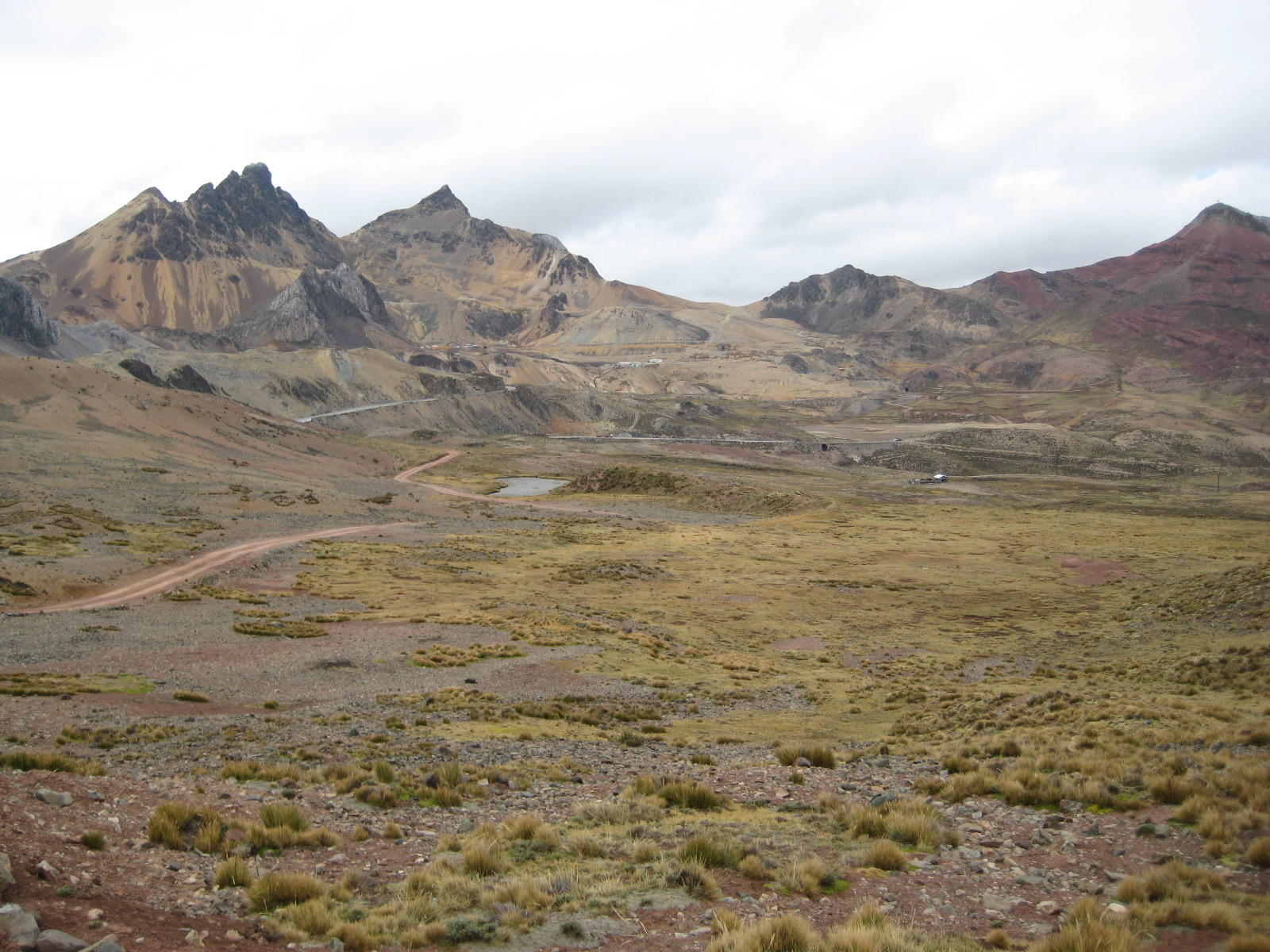 Photo: Dominic Sherony / Wikimedia Commons · CC BY-SA 2.0
Bolivia's Uturuncu volcano road climbs higher, to around 5,768 m, but a landslide has blocked vehicles for years and the route was always a sulphur-mining access track rather than a public road.
North America
1. Mount Blue Sky, 4,348 m, United States
The highest paved road in North America, Colorado 5 from Echo Lake to the summit of Mount Blue Sky (renamed from Mount Evans in 2023). Closed since September 2024 for drainage and pavement repair; it reopens to the summit on 22 May 2026 under Denver Parks and Recreation, with timed-entry reservations required.
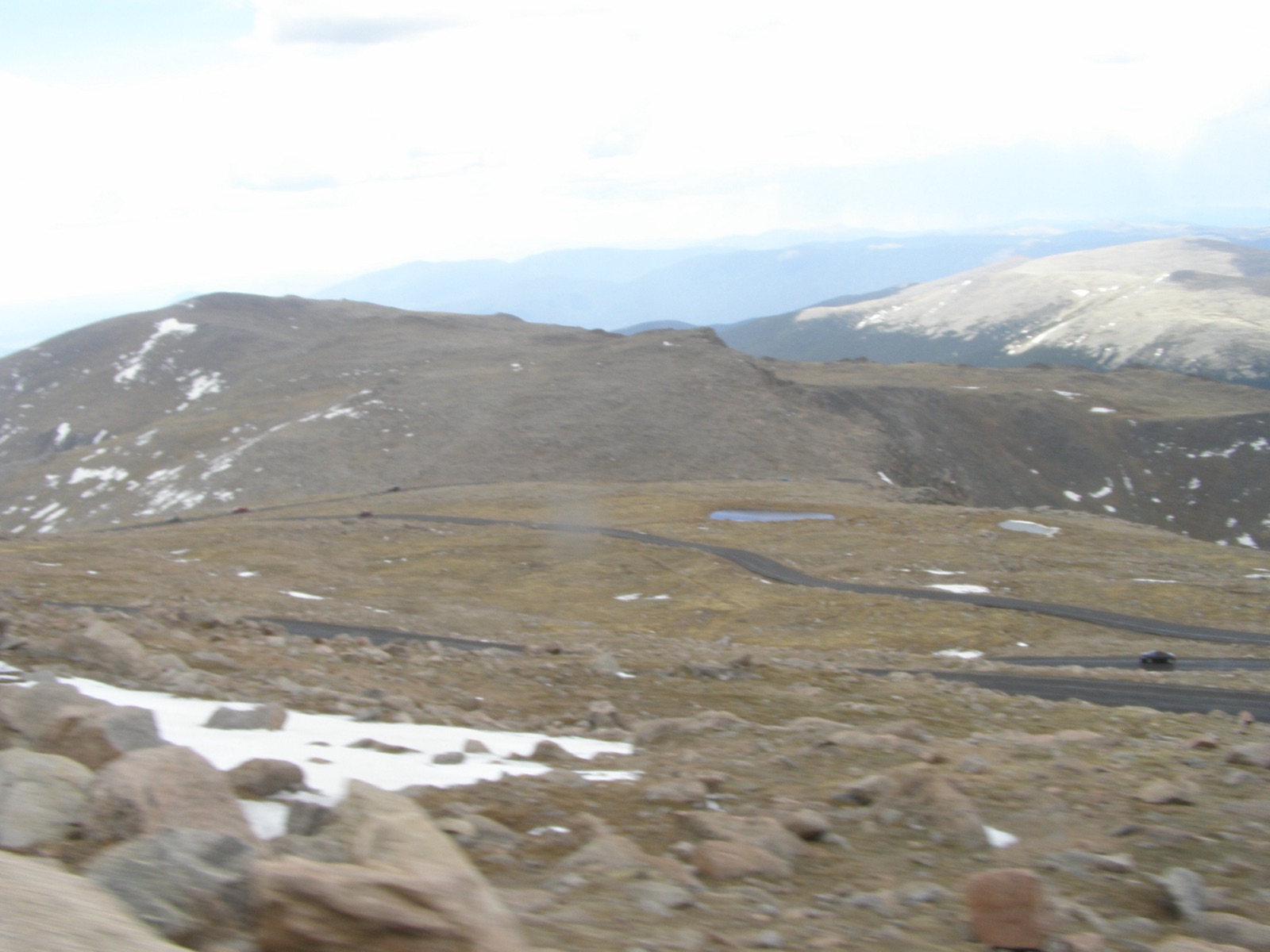 Photo: Chris Light / Wikimedia Commons · CC BY-SA 4.0
2. Pikes Peak Highway, 4,302 m, United States
The toll road up "America's Mountain", home of the 1916-vintage Pikes Peak International Hill Climb. Paved end to end since 2011, open year-round when the weather allows, and mandatory brake-temperature checks on the descent.
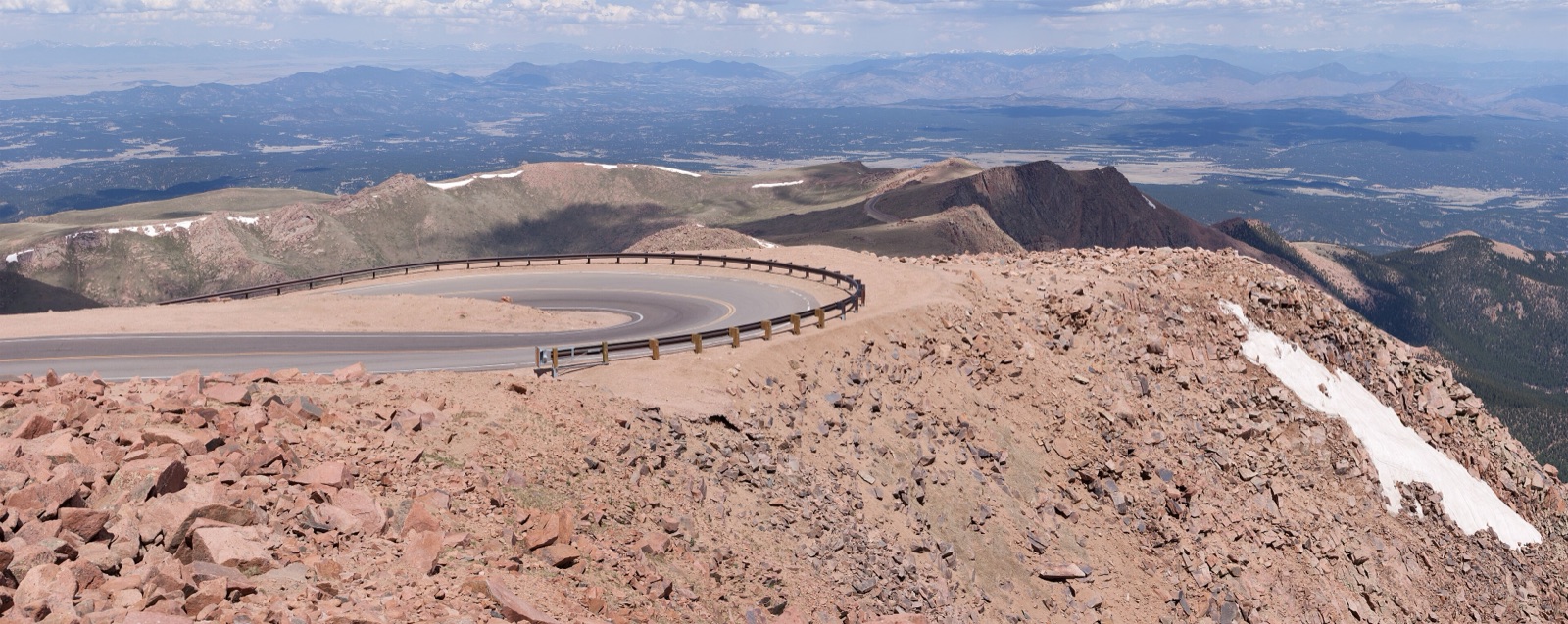 Photo: Alan Stark / Wikimedia Commons · CC BY-SA 2.0
Africa
Africa's highest drivable road is in Ethiopia, on the Sanetti Plateau in the Bale Mountains, where a gravel track crosses a 4,000-metre-plus afroalpine plateau with a spur approaching Tullu Dimtu at 4,377 m. South of the Sahara, the title is a straight contest between two tarred passes in Lesotho.
1. Tlaeeng Pass, ~3,225–3,251 m, Lesotho
The high point of the A1 between Oxbow and Mokhotlong, the main paved link between Maseru and the Mokhotlong district. The summit sign reads 3,251 m; survey figures put the road surface closer to 3,225 m. Effectively tied with neighbouring Mahlasela Pass (3,222 m) for the highest tarred road in southern Africa.
2. Sani Pass, 2,876 m, Lesotho / South Africa
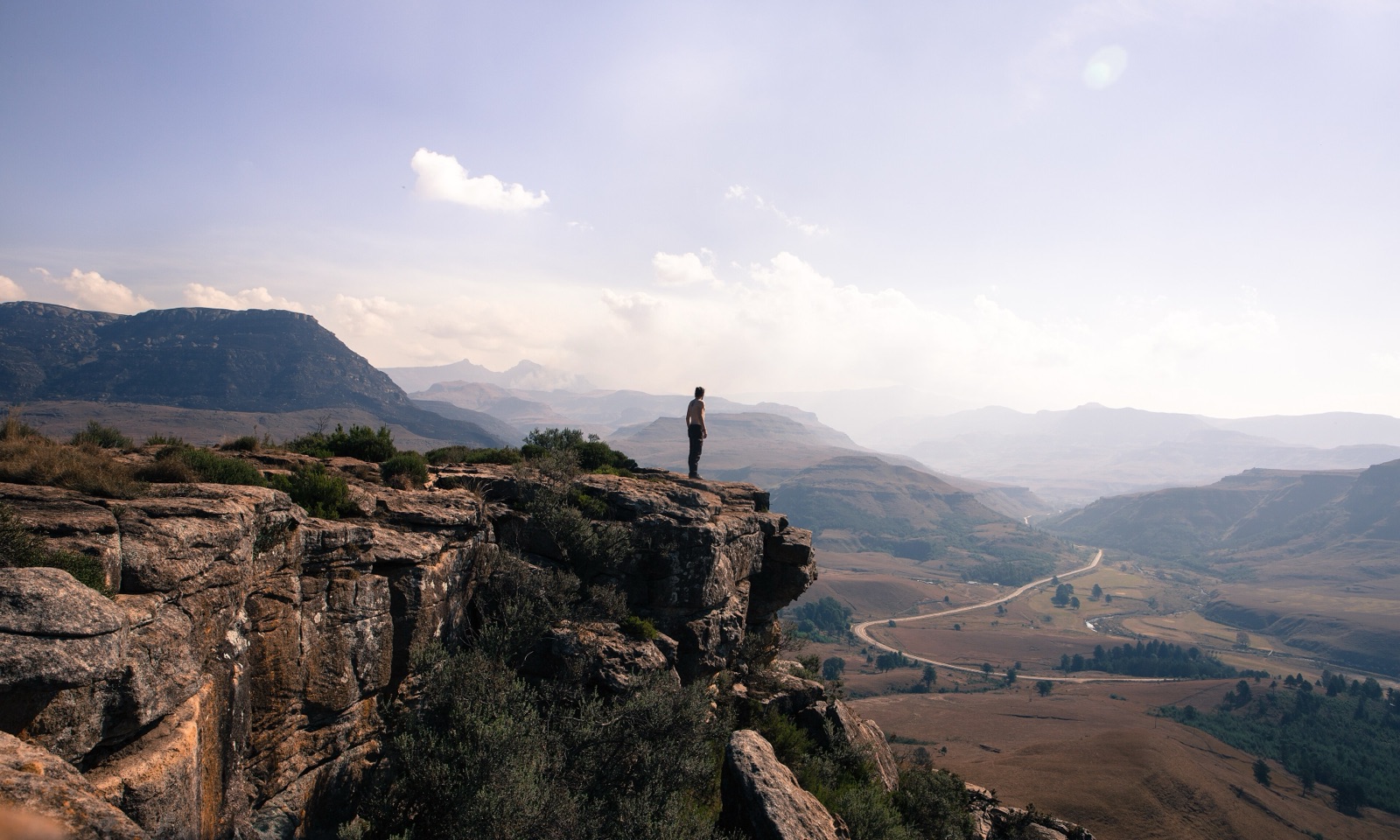
The iconic Drakensberg ascent from KwaZulu-Natal into Lesotho. The Lesotho side is tarred; the upper 8 kilometres on the South African side remain gravel with switchback gradients up to 1:3, and a 4x4 is required. Paving of the South African section is targeted to begin in the 2025–2026 window. Sani Mountain Lodge at the summit claims the title of "highest pub in Africa".
Photo: Joseph Argus / Wikimedia Commons · CC0 (public domain)
Europe
1. Col de la Bonette, 2,802 m, France
The Cime de la Bonette loop road in the Mercantour, signposted as the "highest in Europe". The through pass itself sits at 2,715 m; the 87-metre loop around the Cime bumps it to 2,802 m. Whether that counts as "the pass" is a matter of personal philosophy.
2. Col de l'Iseran, 2,764 m, France
The highest paved Alpine pass without a loop trick, between Val d'Isère and Bonneval-sur-Arc in the Savoie. A regular on the Tour de France route, most recently in 2019 when a hailstorm cut the stage short on the descent.
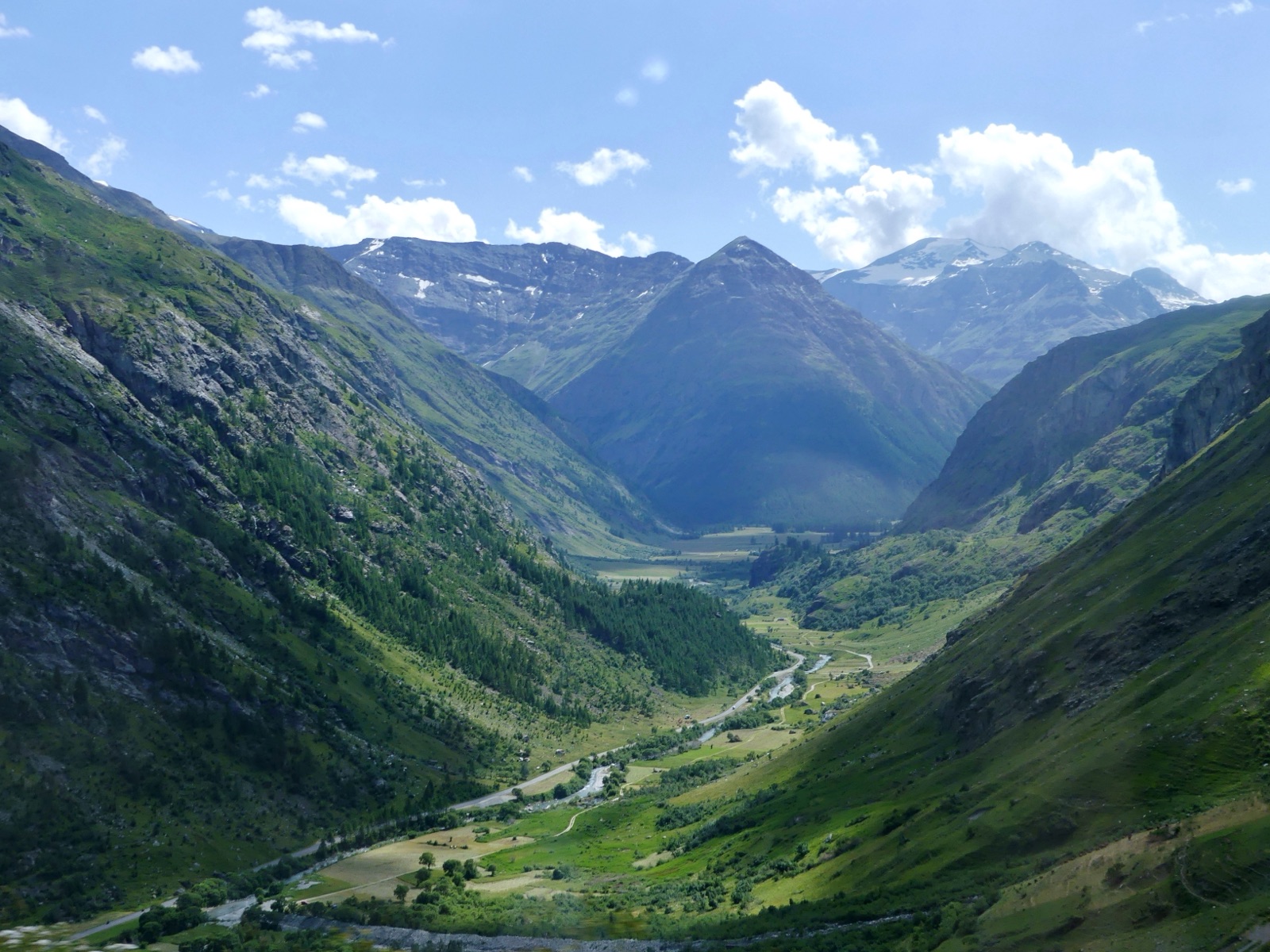 Photo: Florian Pépellin / Wikimedia Commons · CC BY-SA 4.0
Oceania
1. Crown Range Road, 1,076 m, New Zealand
The highest sealed main road in New Zealand, State Highway 89 between Queenstown and Wanaka via the Cardrona valley. Gentle by Andean standards, but the landscape is the point.
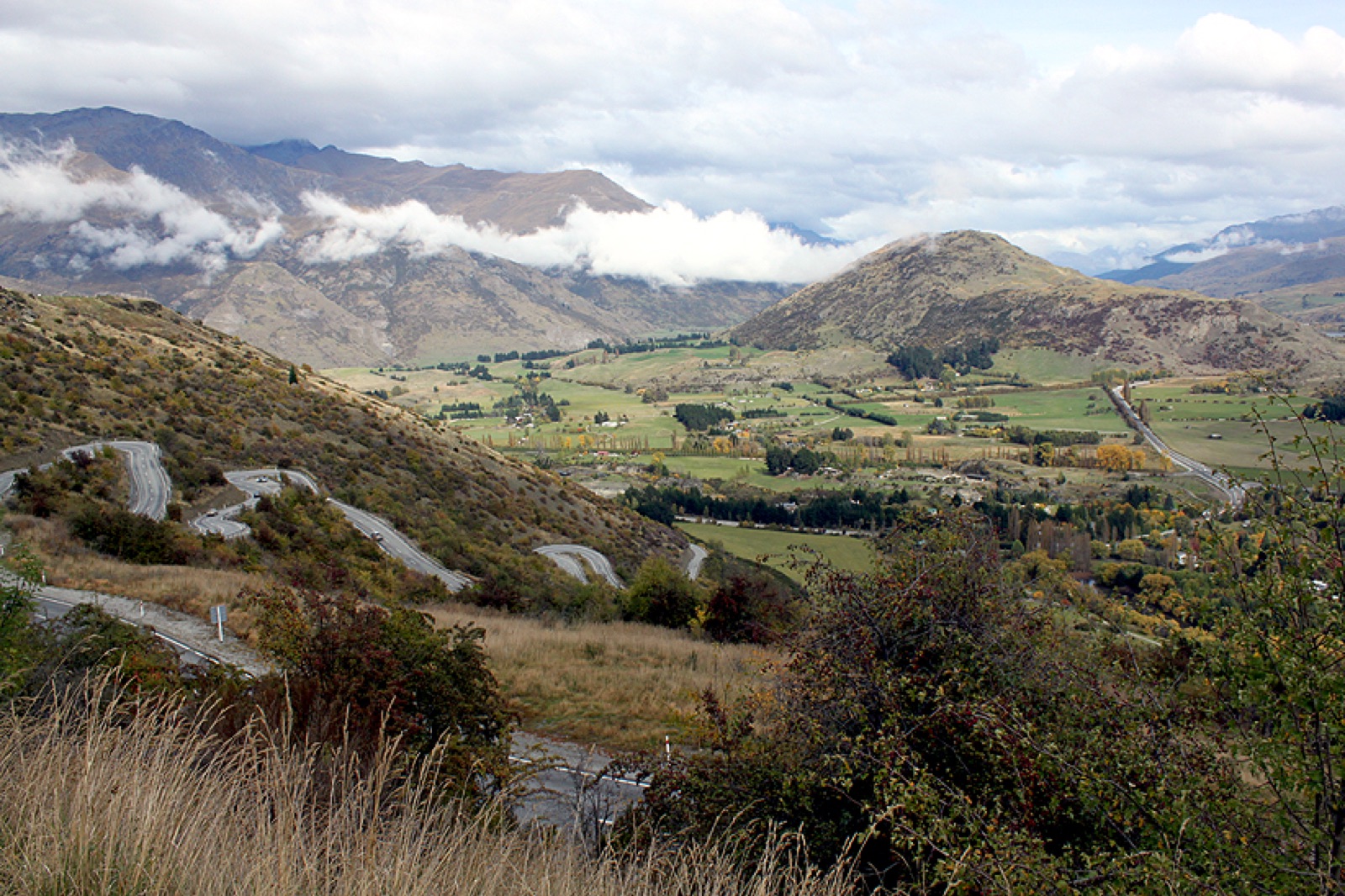 Photo: Wikimedia Commons · CC BY-SA
2. Lindis Pass, 971 m, New Zealand
The tussock saddle on State Highway 8 between Tarras and Omarama. Continuous gold-grass country and one of the most recognisable landscapes in the South Island.
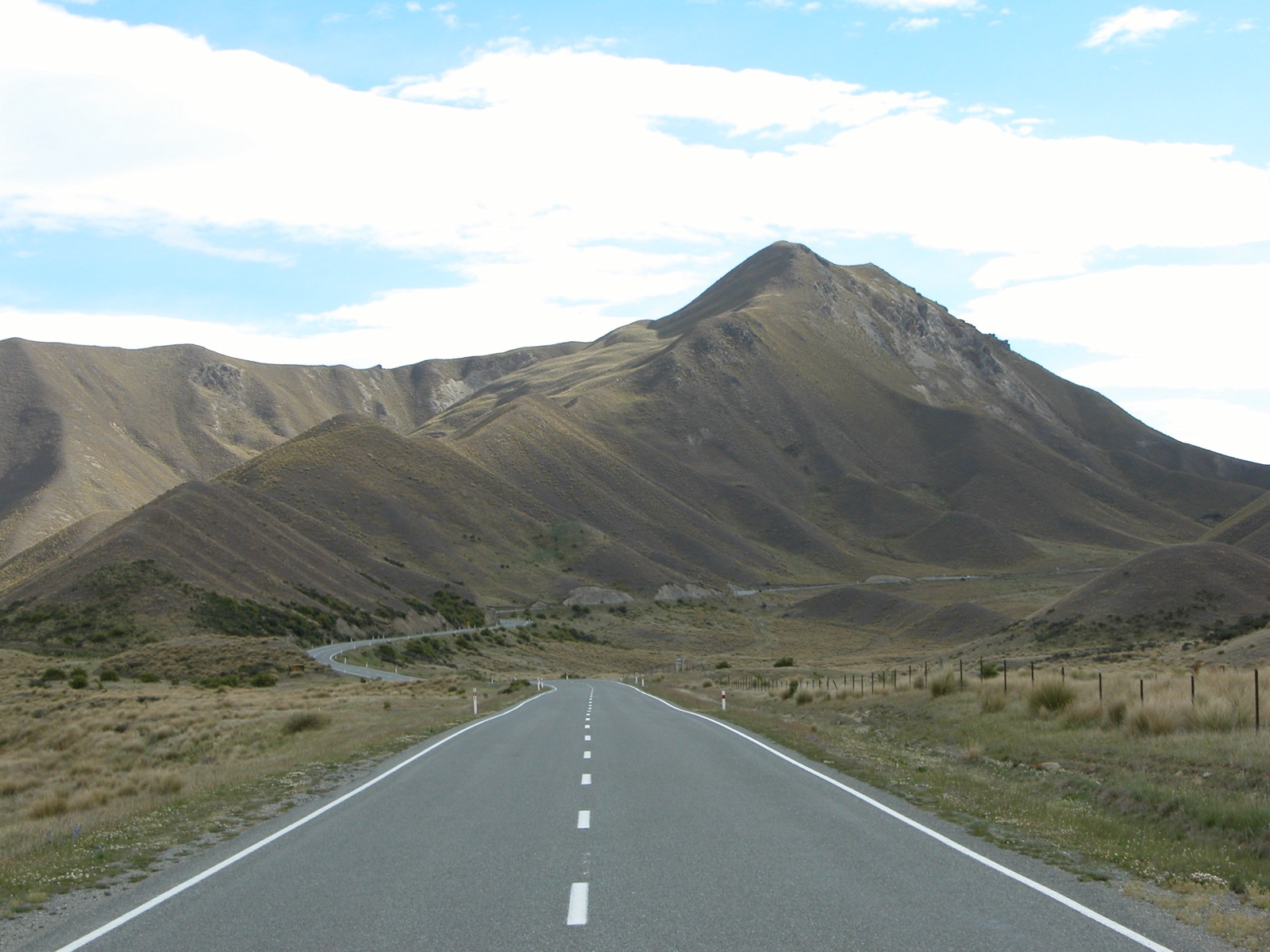 Photo: William M. Connolley / Wikimedia Commons · CC BY-SA 3.0
Antarctica
There are no public roads in Antarctica. The highest drivable corridor on the continent is the compacted-snow South Pole Traverse from McMurdo Station, which crosses the Antarctic Plateau above 3,000 metres. It's closed to anyone without a research institution behind them.
What it takes
Above 5,000 metres, every metre of paved road is an expensive act of will. Asphalt has to be delivered at temperature across multiple days of truck movement through high passes below. Compaction has to happen in a short weather window between winter snow and the summer monsoon. Labourers work at half the oxygen they were born with, and vehicle engines lose around a third of their sea-level power.
It's no accident that the top of the list is dominated by roads built by single state agencies with geopolitical or mining motives. The Border Roads Organisation, Vialidad Nacional, the US Forest Service, the Lesotho Highlands Water Project. The tourists come later; the roads were built for something else.
If you drive one of these, acclimatise for at least a night at 4,000 metres first, carry oxygen in a small canister, and remember that vehicles are not the only things that fail at altitude. You will too.
Passes in this post
- Mig La the world's highest motorable road
- Umling La 5,799 metres in eastern Ladakh
- Abra del Acay 4,972 metres on the old Ruta 40
- Ticlio (Abra de Anticona) the high point of Peru's Central Highway
- Mount Blue Sky (formerly Mount Evans) North America's highest paved road
- Pikes Peak Highway 4,302 metres and "America's Mountain
- Tlaeeng Pass the highest paved road in southern Africa
- Sani Pass the Drakensberg 4x4 classic
- Col de la Bonette 2,802 metres, the roof of France
- Col de l'Iseran 2,764 metres, the highest paved pass in France
- Crown Range New Zealand's highest sealed main road
- Lindis Pass the tussock saddle between Otago and the Mackenzie



.jpg)


.jpg)

_(5911317563).jpg)
.JPG)
