The Sellaronda, the most famous loop in the Dolomites
A guide to the Sellaronda loop, four passes around the Sella massif in the Dolomites. Route details, pass profiles, and practical notes for cyclists, motorcyclists, and drivers.
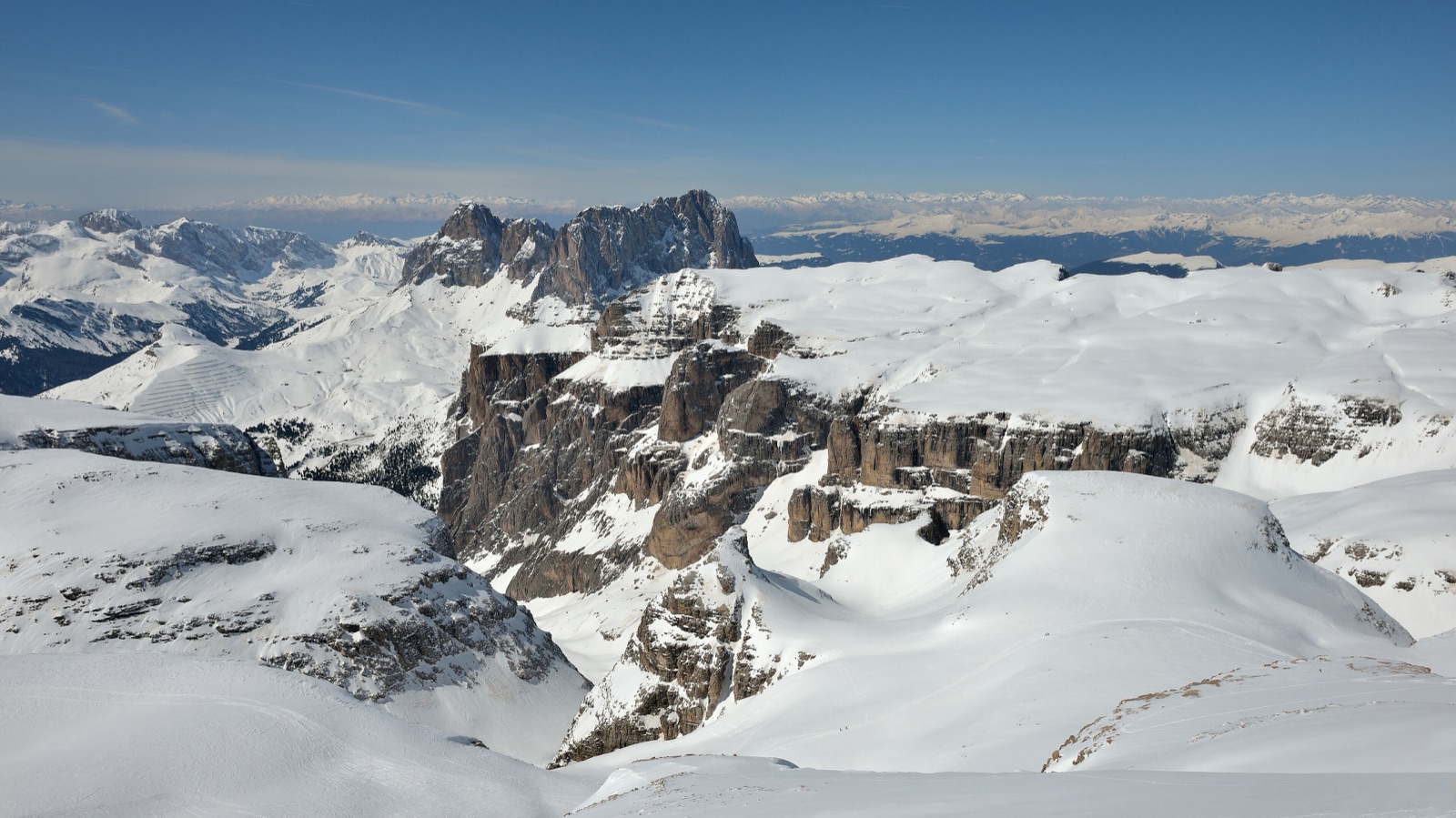
The Sellaronda is a 55-kilometre loop around the Sella massif in the heart of the Dolomites. Four passes connect four valleys and four languages across what is, by most measures, the most scenic driving and cycling circuit in the Alps. Passo Pordoi (2,239 m), Passo Sella (2,218 m), Passo Gardena (2,121 m), and Passo Campolongo (1,875 m).
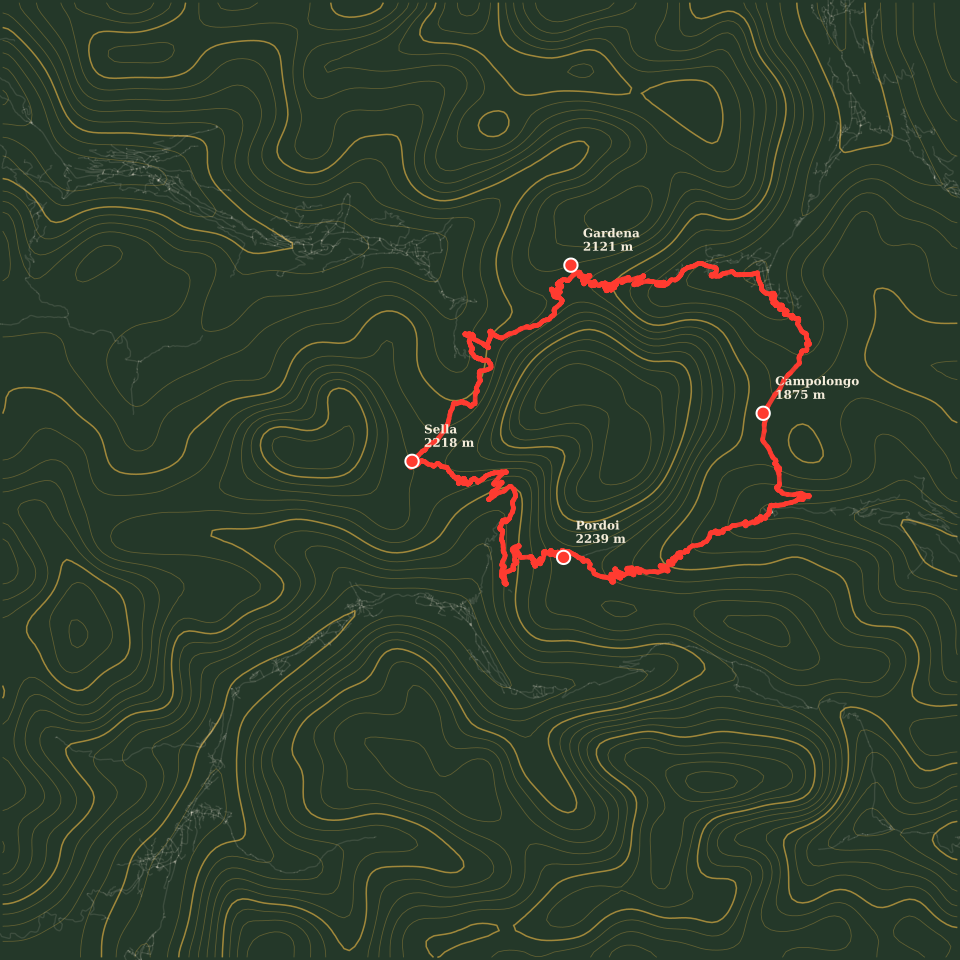
The four passes
Passo Pordoi (2,239 m)
The highest and most dramatic of the four. The south side from Canazei is a long, consistent ramp of 12 km at around 6%. The north side from Arabba is shorter, steeper, and more technical. At the summit, a cable car runs to the Sass Pordoi plateau at 2,950 m. A flat-topped moonscape with views into the Marmolada glacier.
The Pordoi is a regular on the Giro d'Italia. The broad summit car park, the cluster of restaurants, and the constant stream of motorcycles make it feel like the crossroads of the Dolomites, which it more or less is.
Passo Sella (2,218 m)
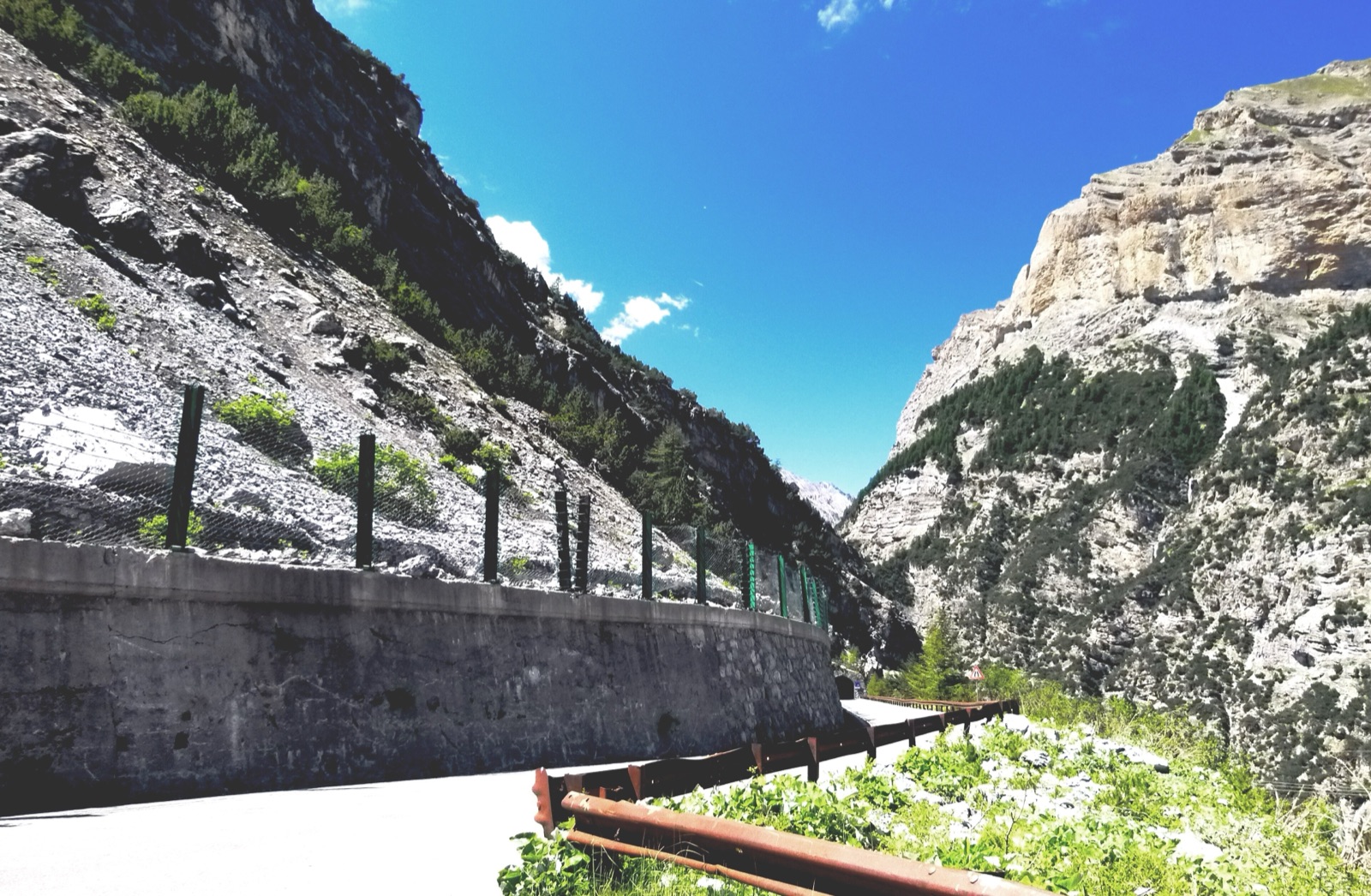
The Sella connects Val di Fassa to Val Gardena and offers the closest views of the Sassolungo, the blade-like tower that defines the Dolomite skyline from this angle. The climb from either side is short (5 to 7 km) and never steep, but the setting is extraordinary. Vertical rock walls on both sides of the road, meadows impossibly green below them.
The descent into Selva di Val Gardena is one of the great sweeping Dolomite descents. Wide, fast, perfectly surfaced.
Passo Gardena (2,121 m)
The gentlest of the four. From Val Gardena the road climbs through high pastures with the Cir peaks and Sassolungo behind you. From the Badia side, the ramp is a touch steeper but still well under 8%. The summit area is quieter than Pordoi or Sella. Fewer restaurants, fewer tour buses, better views.
The Gardena is also the pass that's changing. Starting 1 September 2026, a pilot programme will close the pass to motorised through-traffic (see note below).
Passo Campolongo (1,875 m)
The lowest and shortest climb on the loop. Most riders treat it as the transition between Arabba and Corvara rather than a destination. The views are pastoral rather than dramatic. Rolling green meadows, scattered farmhouses, the Sella massif looming behind you. It's the breather between the other three.
Riding the loop
Total climbing: roughly 1,700 m in either direction. No single ramp exceeds 8%. The road surface on all four passes is excellent.
Clockwise from Corvara: Campolongo, Pordoi, Sella, Gardena. You get the biggest climb (Pordoi) early and finish with the fast Gardena descent into Corvara.
Counter-clockwise from Corvara: Gardena, Sella, Pordoi, Campolongo. The climbs are more evenly spread. Most cyclists prefer this direction.
Time: a fit cyclist does the loop in 3 to 4 hours. On a motorcycle, under 2 hours without stops, but you'll stop, because the views demand it. By car, allow half a day with detours and coffee.
Start anywhere: there's no official start or finish. Corvara, Canazei, Selva di Val Gardena, and Arabba all work.
The roads
On a typical summer day, the loop carries 5,000 to 11,000 vehicles. Motorcycles, sports cars, campervans, tourist buses, and cyclists all share the same hairpins. It works better than it sounds (the roads were built wide) but July and August are genuinely busy. June and September are better.
Early morning is always best. The passes are quiet before 9 AM, the light hits the rock walls at the right angle, and you have the whole day ahead if weather turns.
For cyclists: Sellaronda Bike Day
Twice a year the entire loop closes to motorised traffic. In 2026 the dates are Saturday 6 June and Saturday 12 September, from 08:30 to 16:00. No entry fee, no signup, no timing chip. Roughly 20,000 cyclists share the car-free roads. If you've never ridden the Dolomites, this is the day to start.
There's also the Dolomiti Bike Day, a similar car-free event on Passo Valparola and Passo Falzarego. About 50 km with 1,600 m of climbing, usually held in mid-June.
Note: Gardena Pass traffic restrictions from September 2026
Starting 1 September 2026, Passo Gardena will close to motorised through-traffic as a two-month pilot. Cars and motorcycles are banned from transiting. Only residents, hotel guests, suppliers, and up to 150 pre-booked parking spots per day are exempt. Cyclists are unaffected.
If the pilot succeeds, a seasonal closure between May and October is planned from 2027. That would break the Sellaronda as a motorised loop for half the year. Worth knowing if you're planning a Dolomites trip for late summer.
Practical notes
- Season: Pordoi, Sella, and Campolongo open late April. Gardena typically follows in early May. All close in late November.
- Weather: afternoon thunderstorms are common in summer. Start early.
- Fuel: fill up in the valley. No petrol stations on the passes.
- Logging it: Mountain Passes auto-logs all four passes as you cross them. The Pordoi unlocks a vintage poster in your collection.